
Why Your Tomato Flowers Aren’t Turning into Tomatoes: Common Causes and Solutions
- Growing in Edmonton
- May 29, 2024
- 3 min read
Growing tomatoes can be immensely rewarding, but it's also frustrating when your plants bloom with beautiful yellow flowers that never develop into the juicy fruits. If your tomato flowers are not setting fruit, you're not alone. Here are some common reasons this might be happening and what you can do about it.

Temperature Extremes
Tomatoes are sensitive to temperature. Optimal fruit set occurs when daytime temperatures are between 70-85°F (21-29°C) and nighttime temperatures are between 55-70°F (13-21°C). Temperatures outside these ranges can cause blossoms to drop off.
Solution: If you’re experiencing extreme temperatures, try providing shade during the hottest part of the day or using row covers to keep plants warm during cool nights. I have friends that swear by these Kozy Coats. Planting heat-tolerant or cold-tolerant tomato varieties can also help.
Poor Pollination
Tomato flowers are self-pollinating, but they still need some help from wind or insects. Lack of movement can result in poor pollination and, consequently, no fruit.
Solution: To improve pollination, gently shake your plants or use an electric toothbrush near the flowers to simulate the vibration of bees. Just doing this every few days will be sufficient. Ensuring your garden attracts pollinators like bees can also be beneficial.
Water Stress
Both overwatering and underwatering can lead to blossom drop. Tomatoes need consistent moisture, and fluctuations can stress the plant, causing it to abandon fruit production. Solution: Water your tomatoes deeply and consistently. Mulching around the base of the plants can help retain soil moisture and regulate temperature. Mulch is so cheap and it will make a world of difference to keep the soil moist for longer and deter the weed population.
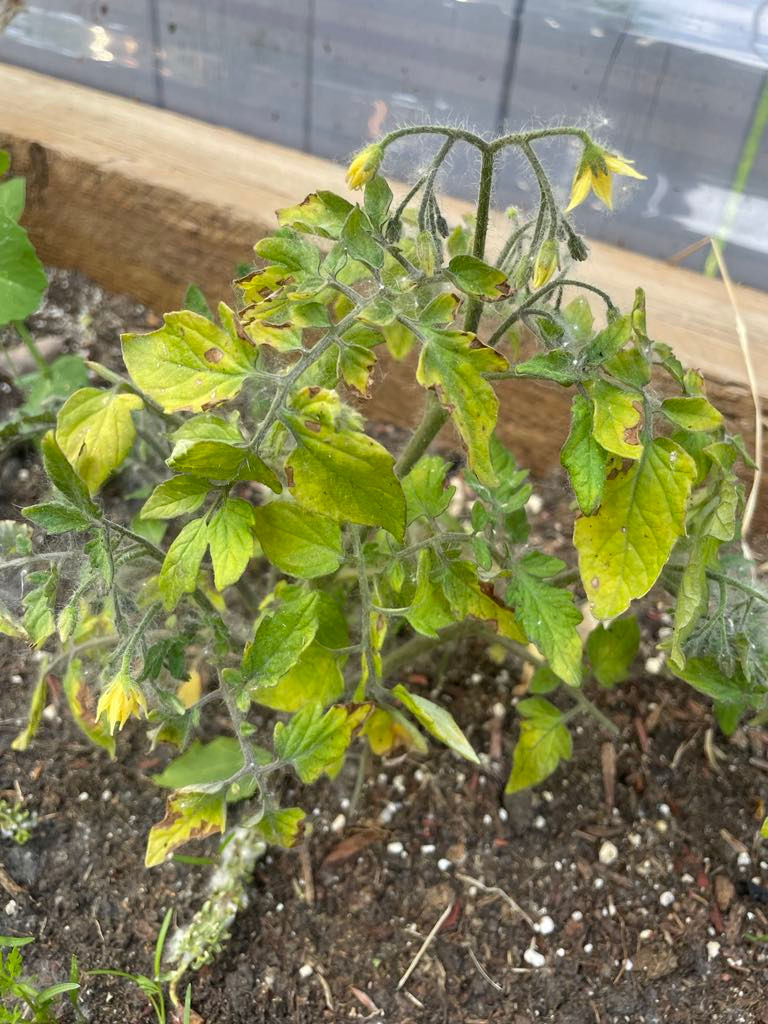
Nutrient Imbalance
Excess nitrogen in the soil can promote lush, green foliage at the expense of flowers and fruit. On the other hand, a lack of essential nutrients like phosphorus can also inhibit fruit set. Solution: Use a balanced fertilizer with a higher phosphorus content (the middle number in the N-P-K ratio). Avoid over-fertilizing with nitrogen-rich fertilizers once the plants have started to flower.
Pest and Disease Pressure
Certain pests, such as thrips, aphids, and tomato hornworms, can damage flowers and interfere with fruit set. Diseases like blossom end rot, caused by calcium deficiency, can also affect fruit development.
Solution: Regularly inspect your plants for signs of pests and diseases. Use appropriate pest control methods, such as insecticidal soap or neem oil for pests, and ensure your plants are getting adequate calcium either through soil amendments or foliar sprays. My Favorite homemade solution for bugs is to put a few table spoons of dish soap at the bottom of a spray bottle or watering can and water my plants with it. I usually do it every few days if I notice an infestaion of something and it works like a charm. It kills the bugs and doesnt bother the plants at all.
Plant Variety
Some tomato varieties are more prone to blossom drop or have specific requirements for fruit set. Heirloom varieties, for example, may be more sensitive to environmental conditions compared to hybrids.
Solution: Research the varieties you are planting and choose ones that are well-suited to your local growing conditions. Hybrid varieties often have more robust fruit-setting capabilities under a range of conditions.
Overcrowding and Poor Air Circulation
Tomato plants that are too close together can suffer from poor air circulation, leading to higher humidity around the flowers and potential fungal issues. Solution: Plant tomatoes with adequate spacing (usually 18-24 inches apart) to ensure good air circulation. Pruning lower leaves and suckers can also help improve airflow. I do usualy remove any leaves that touch the soil directly automatically once the plant is a few inches tall.
Tomato flowers not turning into fruit can be attributed to various factors, often working in combination. By paying attention to temperature, pollination, watering, nutrients, pest control, variety selection, and plant spacing, you can create the optimal conditions for your tomatoes to thrive. With a bit of care and attention, you'll be harvesting delicious, home-grown tomatoes in no time. Remember, Im rooting for you!

Comments